Every seller does this math eventually, usually at 11pm with a spreadsheet. Here it is done once, in the open. Numbers are typical published rates as of mid-2026 - your market will vary, the shape of the math won’t.
The four ways to get a product photo
A photographer. Product specialists commonly quote either per photo ($25–$120 depending on styling complexity) or per day ($500–$2,000, yielding maybe 15–40 finished shots). For that you get taste, consistency and someone to blame - genuinely valuable things. The catch is the minimum: most won’t touch a three-product job, so small catalogs pay enterprise-shaped invoices.
A per-photo studio service. Ship your product to a warehouse studio, get standardised shots back at $30–$60 each. Good for white-background compliance work; less good when you want nine styled variations, because each variation is another $30–$60.
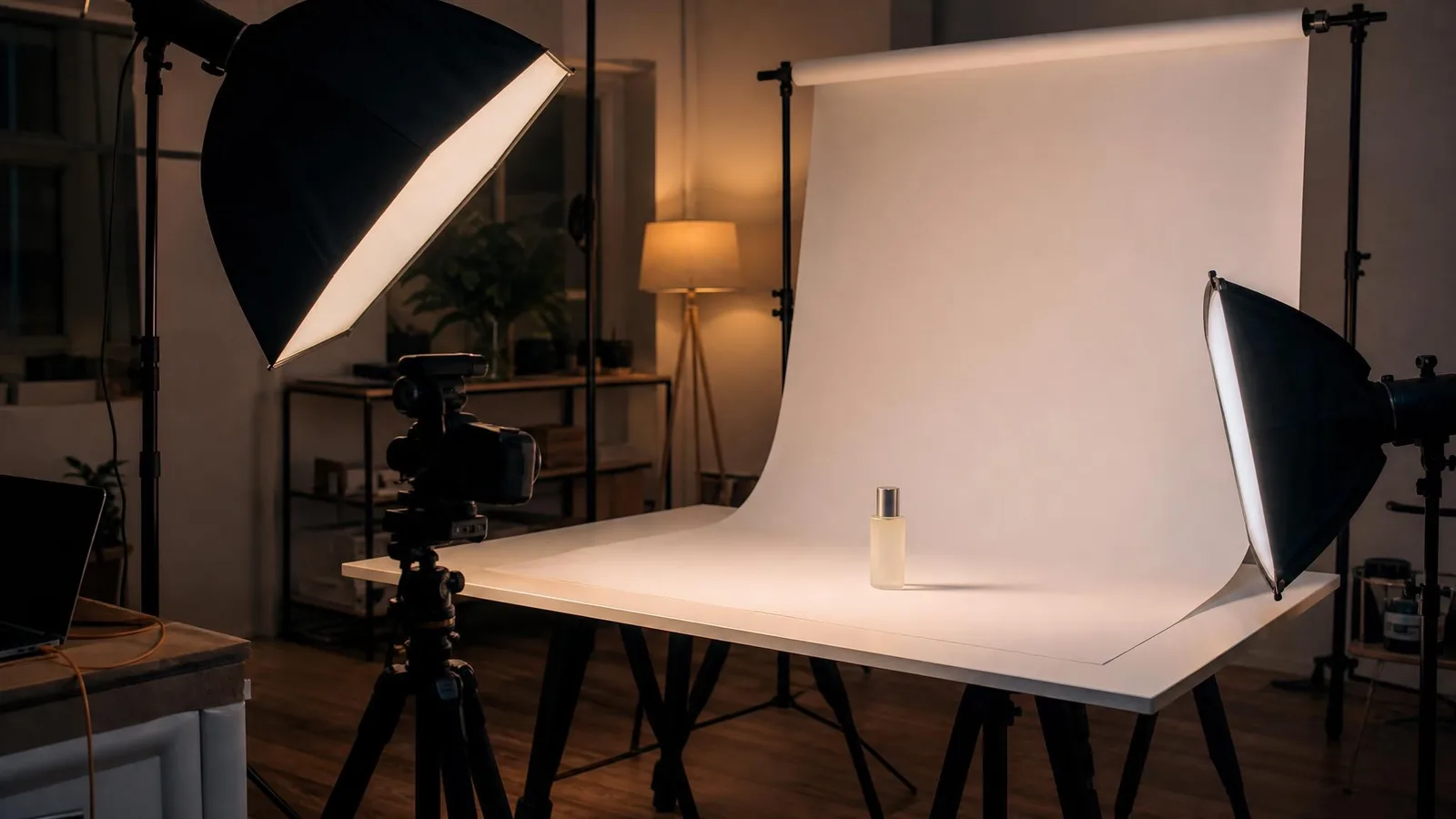
DIY. A lightbox ($40–$150), a tripod, two weekends of learning, and your evenings. The cash cost is low and the results are honestly fine for hard-sided products. The real spend is time - and the ceiling shows up exactly where photography gets hard: reflective surfaces, fabric drape, lifestyle scenes you don’t have a set for.
Stock photos. $10–$50 a license and instantly disqualified for the one job that matters: it’s not your product. Marketplaces explicitly reject stock for listing images - Etsy names it in policy, Uber Eats bans it outright.



Where generation lands
Phoxel generates from your own phone snaps at under a dollar a photo on every pack - see pricing for the current ladder. The honest comparison isn’t “cheaper photographer”, because a photographer does things generation doesn’t: physical styling, props you don’t own, art direction over a coffee.
The comparison that actually holds: generation replaces the middle of the market - the routine catalog shot, the background variation, the seasonal restyle, the ninth angle of the same SKU. The shots where the creative decision was made long ago and you’re paying $40 a frame for execution.
The math that changes behaviour
The per-photo price isn’t the interesting number. The interesting number is the price of a variation. With a photographer, variation N+1 costs the same as variation 1 - so sellers order four photos and stop. When a variation costs under a dollar, you generate twelve, keep six, and your listing suddenly has the context, scale and styling shots that the twenty photo slots were designed for.
Filling slots isn’t vanity. Listings with full photo sets convert better for the same reason physical shops let you pick things up - more of the pre-purchase questions get answered by looking.
Run your own numbers
We built a free calculator that does this arithmetic for your actual catalog size - photographer rates on one side, credit packs on the other, including the cheapest pack combination for your photo count. No signup; it runs in your browser.
And if the answer comes out “photographer” for your case - hire the photographer. This page will still be here for the restyles.