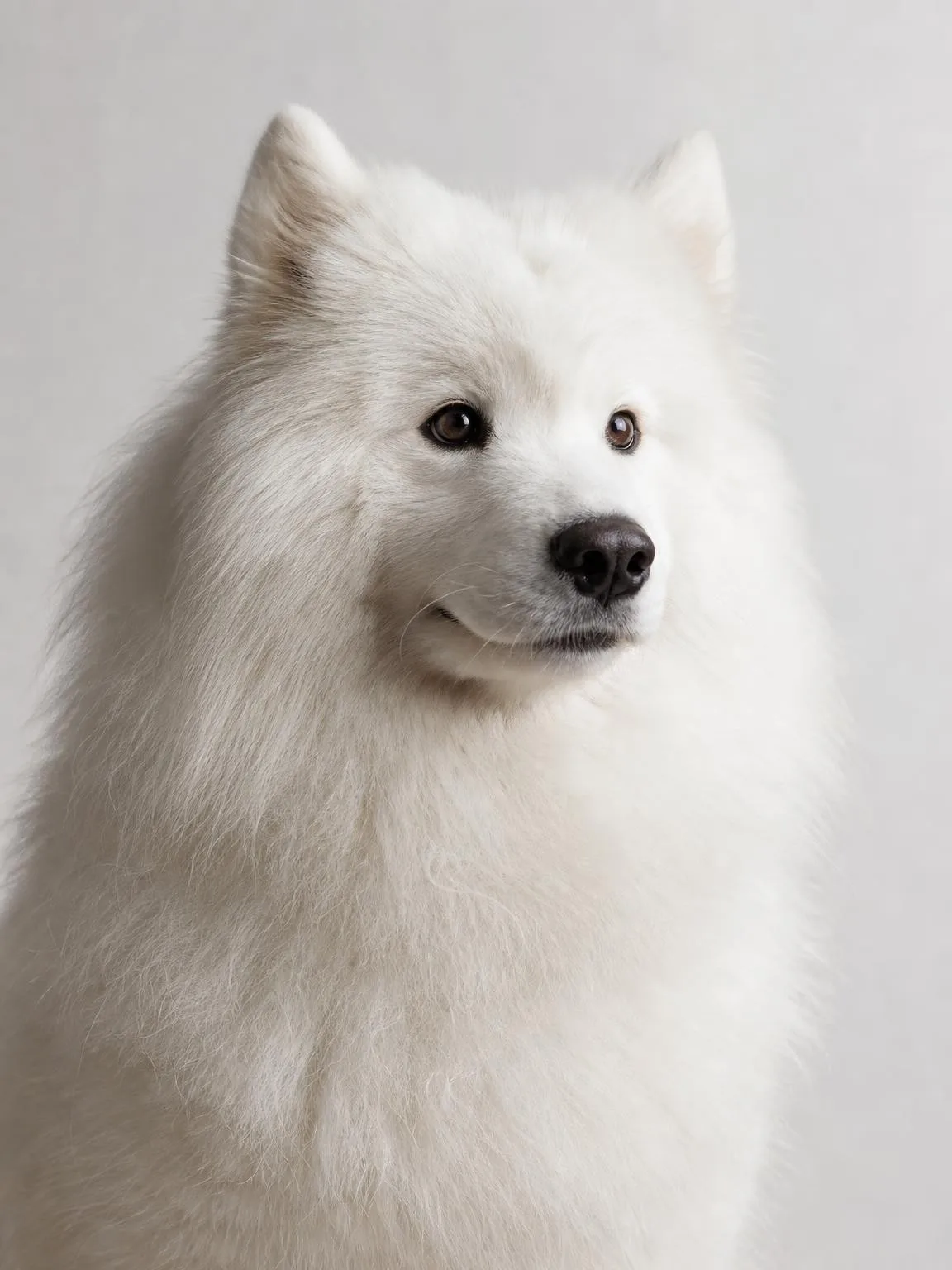
A studio pet session runs $150–400 and comes back with one look. That’s the actual constraint: not the price, the singularity. You pick a backdrop in advance and live with it.
Below is the same dog in six settings, which is the part that changes when the backdrop stops being a physical object.
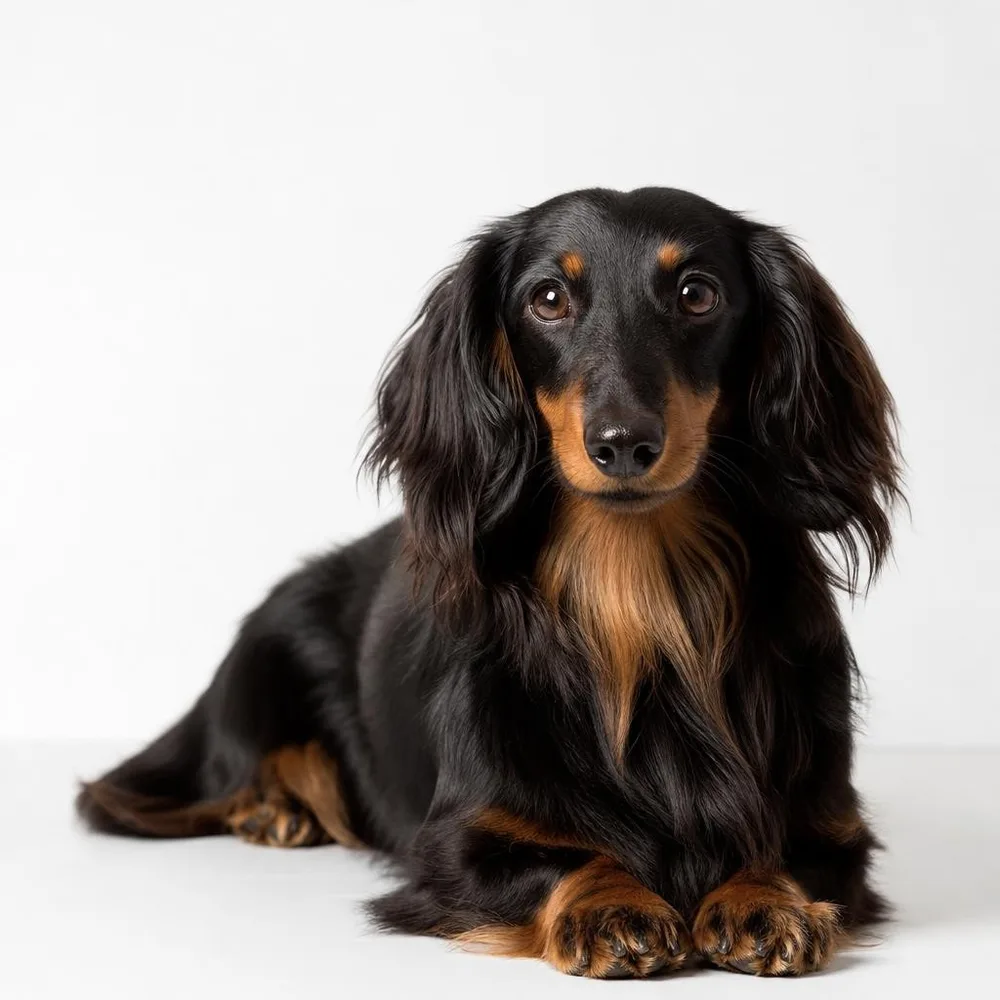
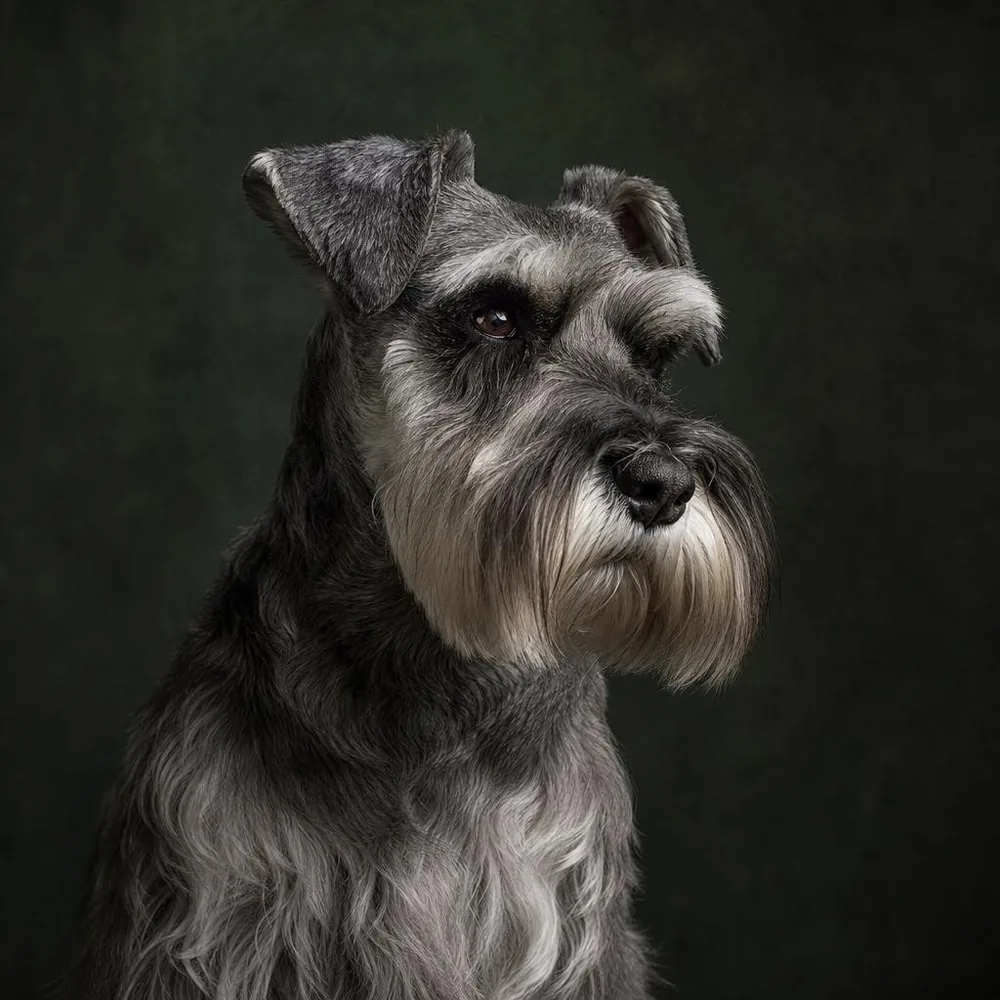
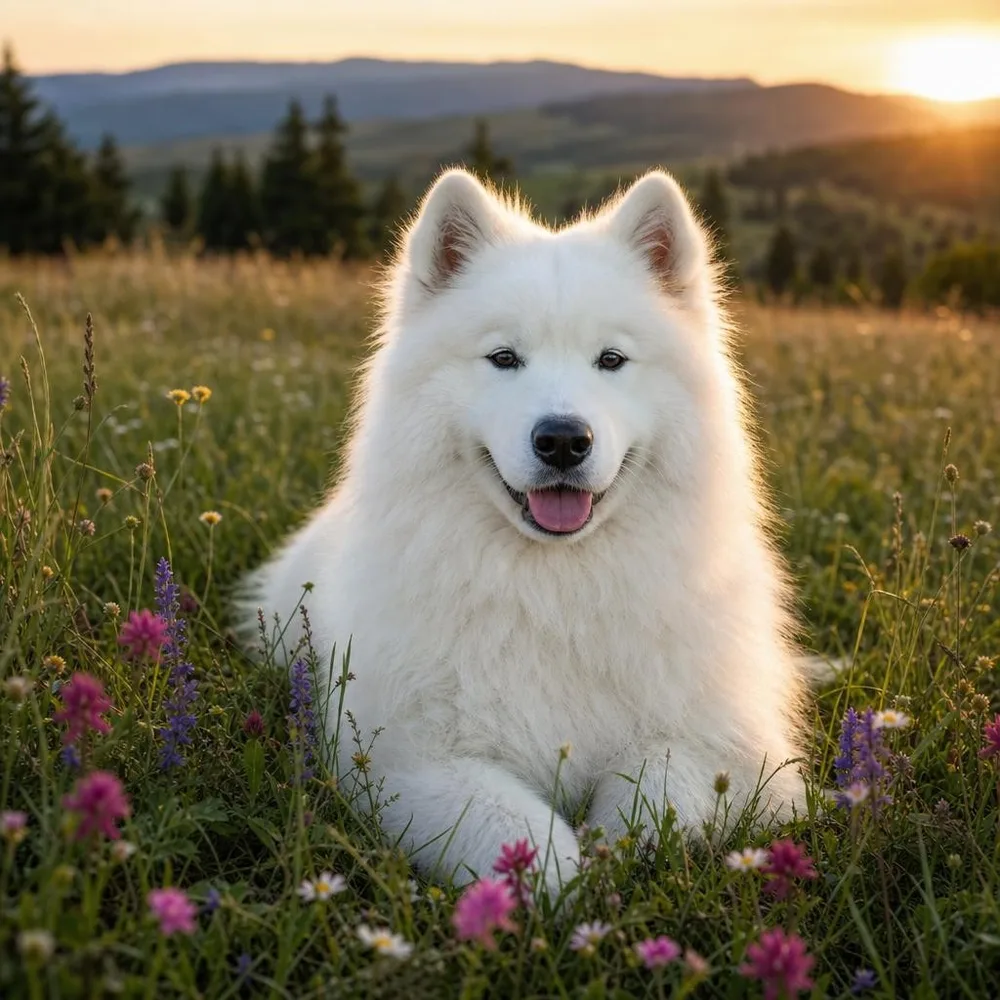
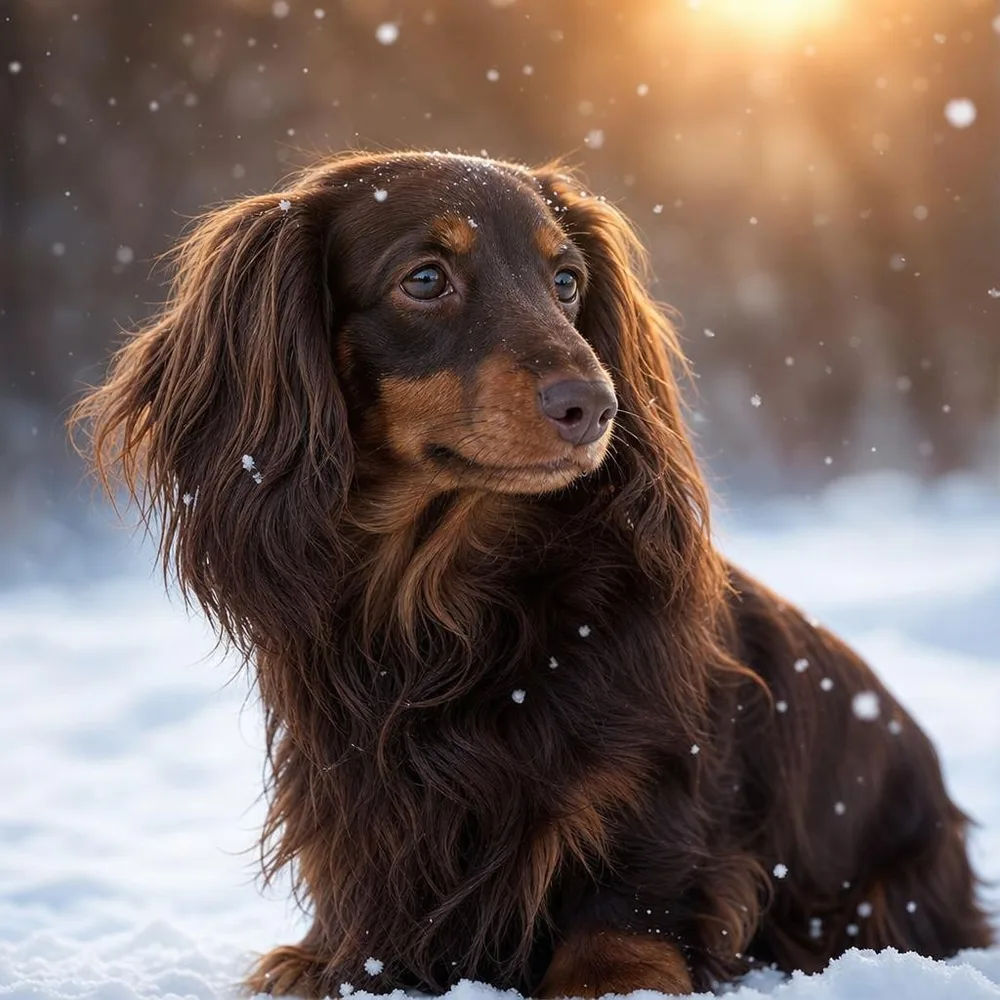
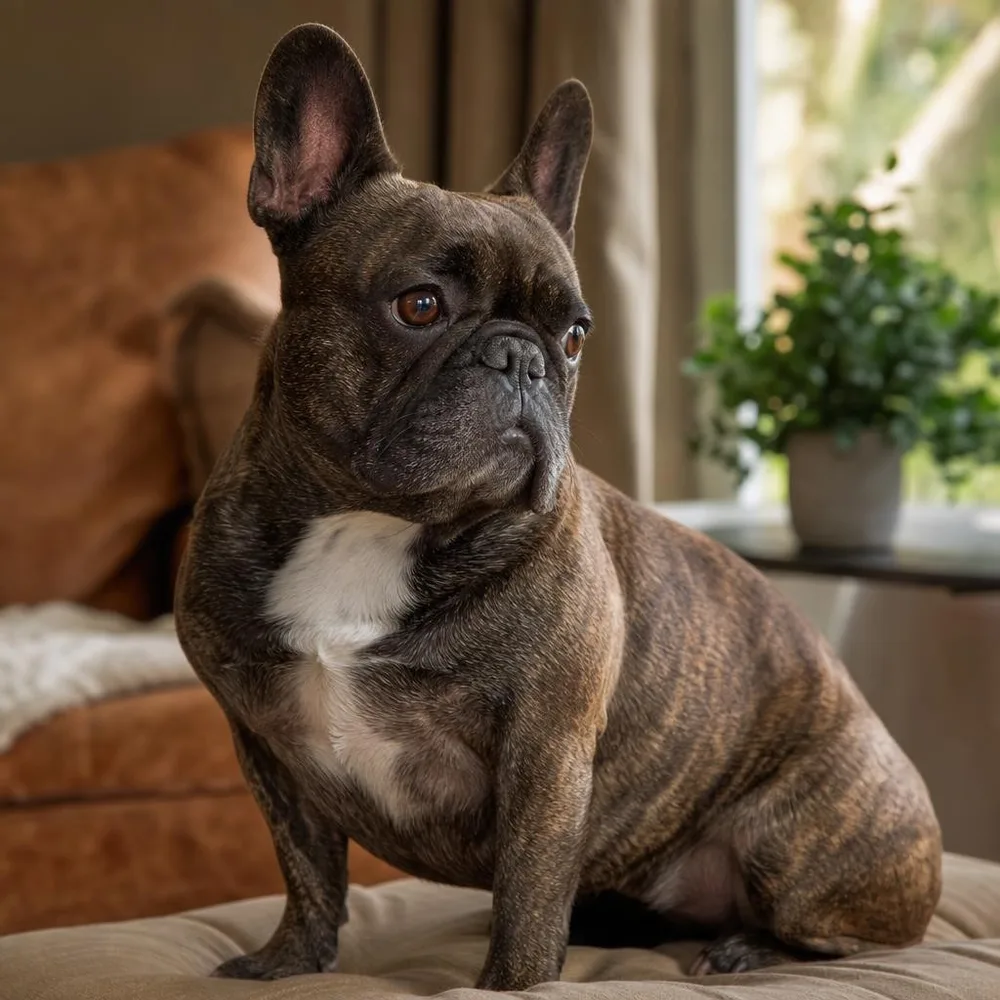
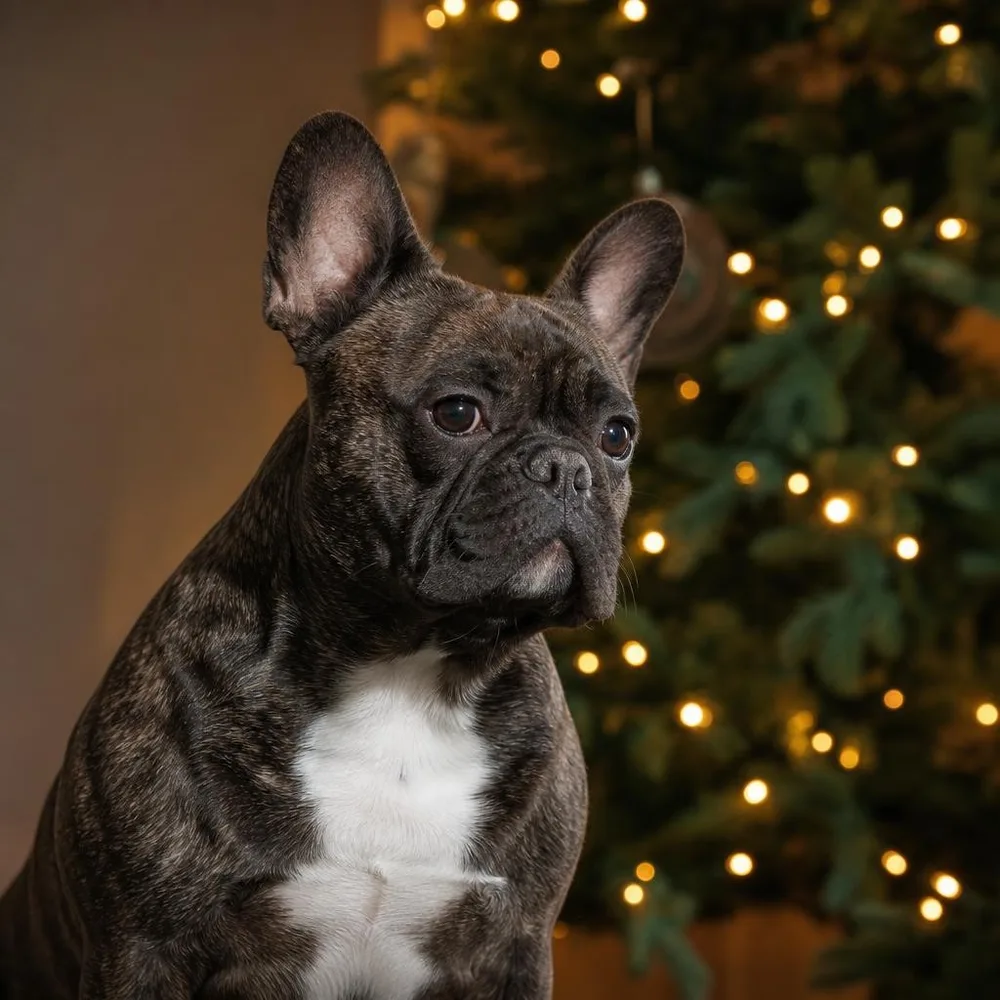
What each one is for
White studio. The default for a reason: it prints well, it crops to anything, and it’s the one that works as a gift. If you only ever make one, make this one.
Dark studio. A rim light against near-black. Flatters long or curly coats, because the edge light separates fur from the background instead of swallowing it. Bad for very dark dogs - you lose the outline.
Meadow. Warm, outdoors, shallow depth of field. Reads as a real photograph more easily than the studio looks do, which makes it the safest choice if you dislike the “portrait studio” aesthetic.
Snow. Overcast light, cool tones. The one people order for cards. Works best on dark or ginger coats; a white dog in snow is a technical fight nobody wins.
Home. Sofa, lamp, indoor warmth. Least dramatic, most personal - the one that looks like the dog actually lives somewhere.
Christmas. String lights, evergreen, orange spill. Seasonal, obviously, but it’s the highest-converting one in December by a wide margin.
The thing that must not change
Everything above is a background choice. The dog is not.
Markings, ear shape, muzzle length, eye colour, the exact grey around the snout - those have to be identical in all six, and if they aren’t, none of the six are worth having. A portrait that flatters a dog who isn’t yours is a failure regardless of how good the light is.
That’s why the reference photos matter more here than in any other category. Products have edges; faces have identity. Three varied angles - sitting, standing, a head close-up - is the minimum that keeps a face consistent across six renders. One photo gives you a plausible dog of the right breed, which is a different animal.
The honest limitation
Generation is good at coats, light and setting. It is weakest exactly where you look hardest: the asymmetric white patch, the notch in one ear, the eye that’s slightly lighter than the other. If your dog’s charm lives in an irregularity, feed it more references of that irregularity, and check every frame before you print anything.
Six looks for the price of a coffee is only interesting if all six are your dog. That’s the test - not the light.